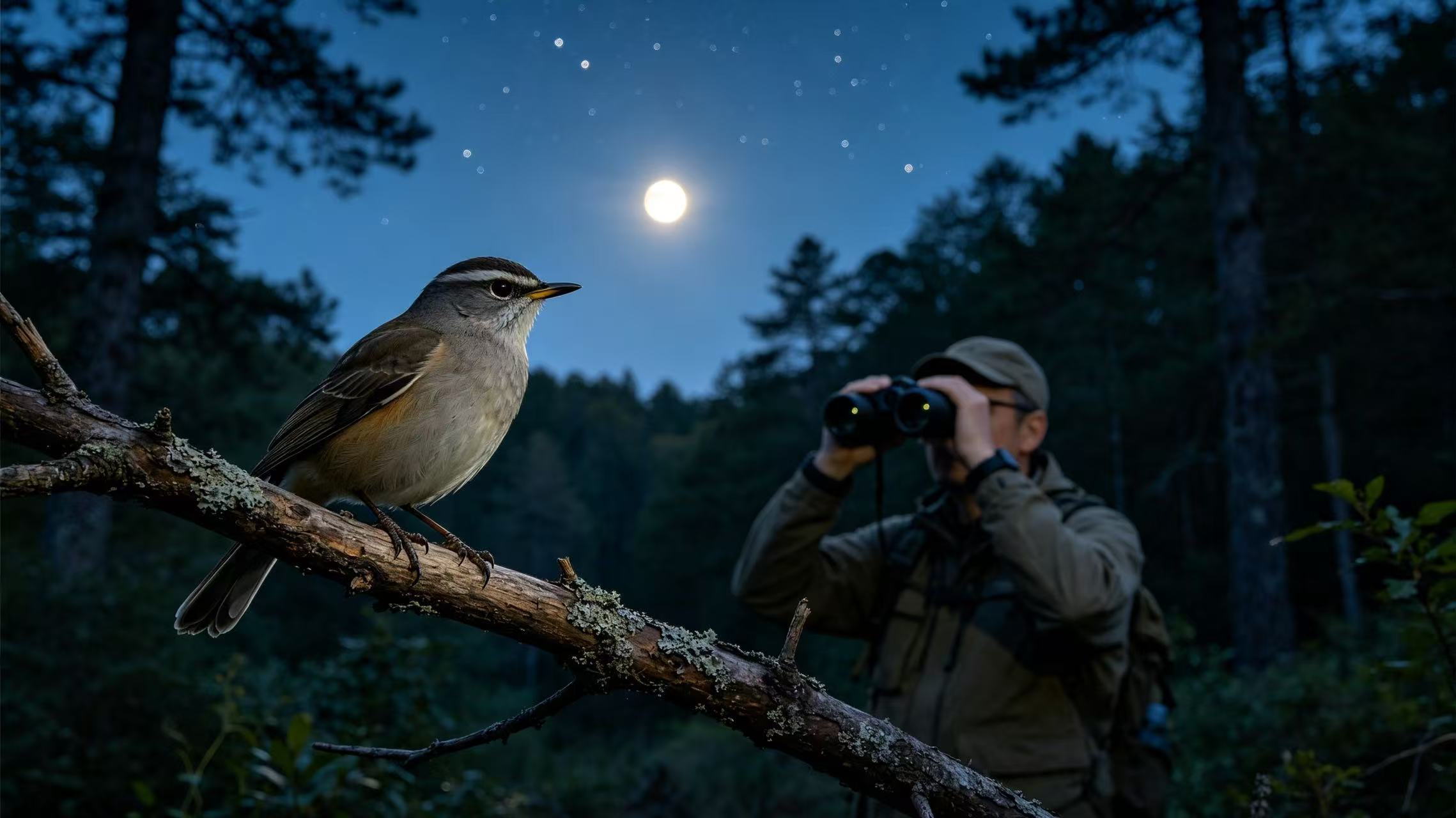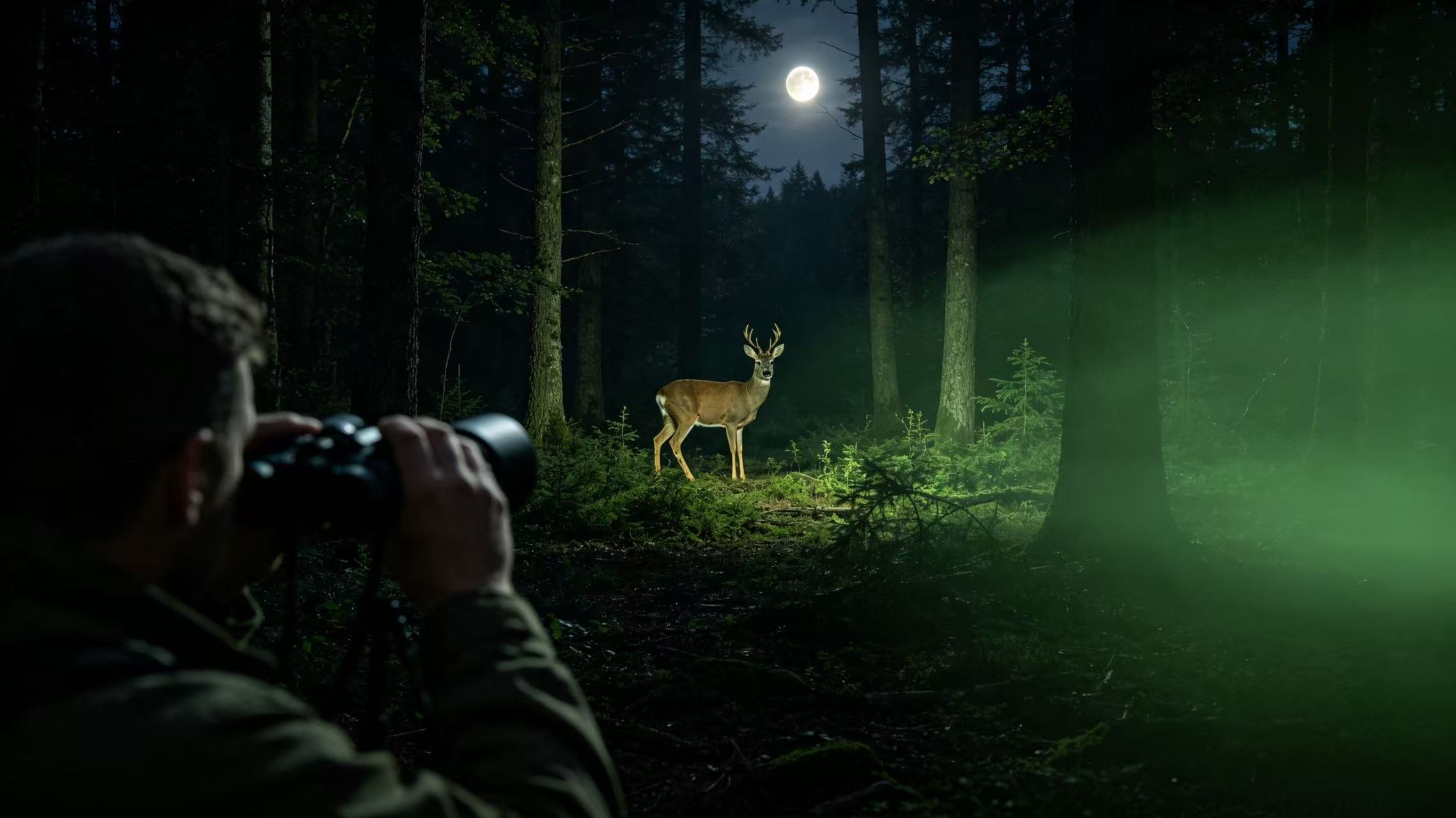
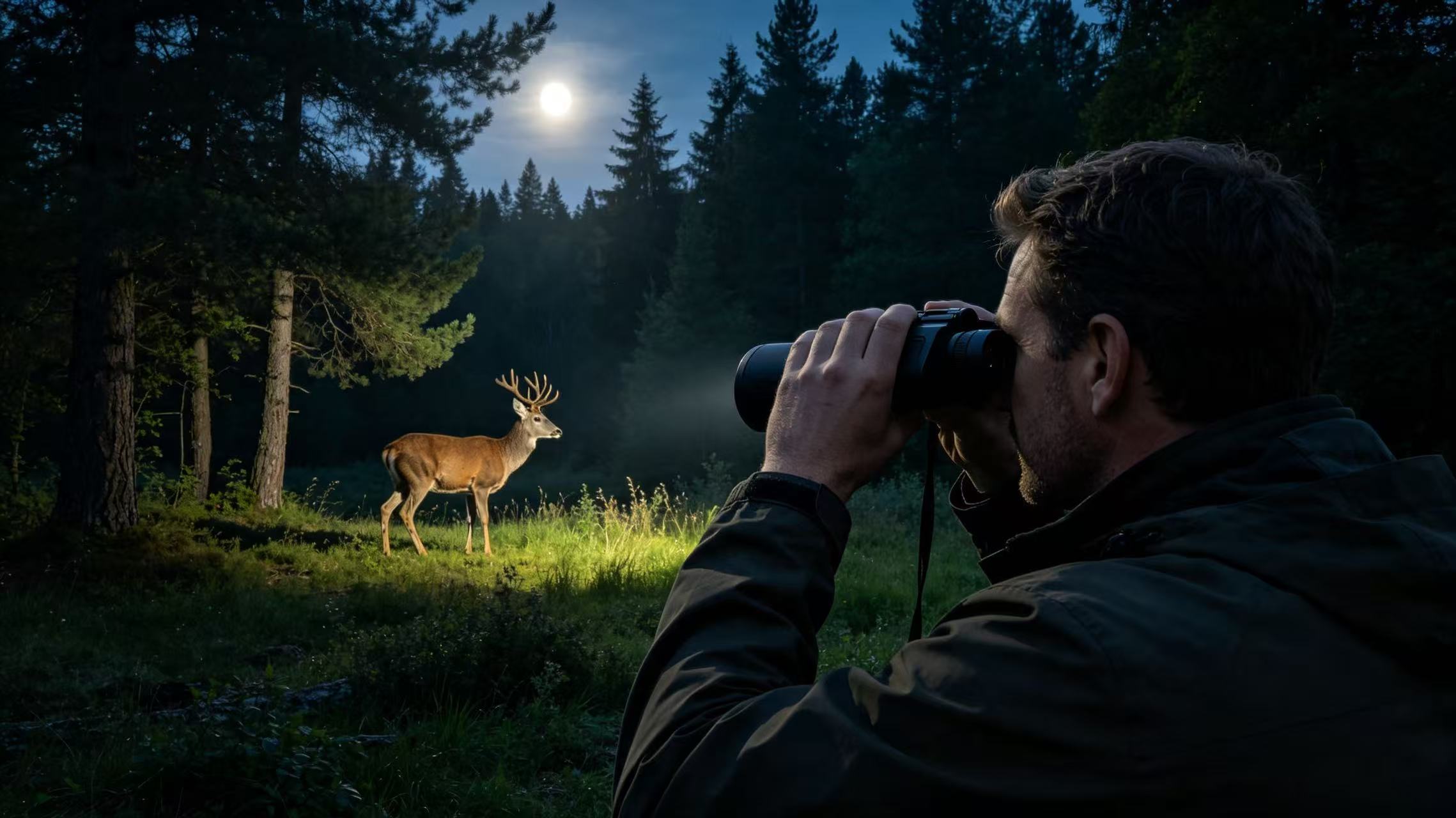
One of the most common questions when choosing a digital night vision device is: how far can it actually see?
The answer depends on multiple factors, including the image sensor, lens quality, infrared illumination, viewing environment, and the level of detail required.
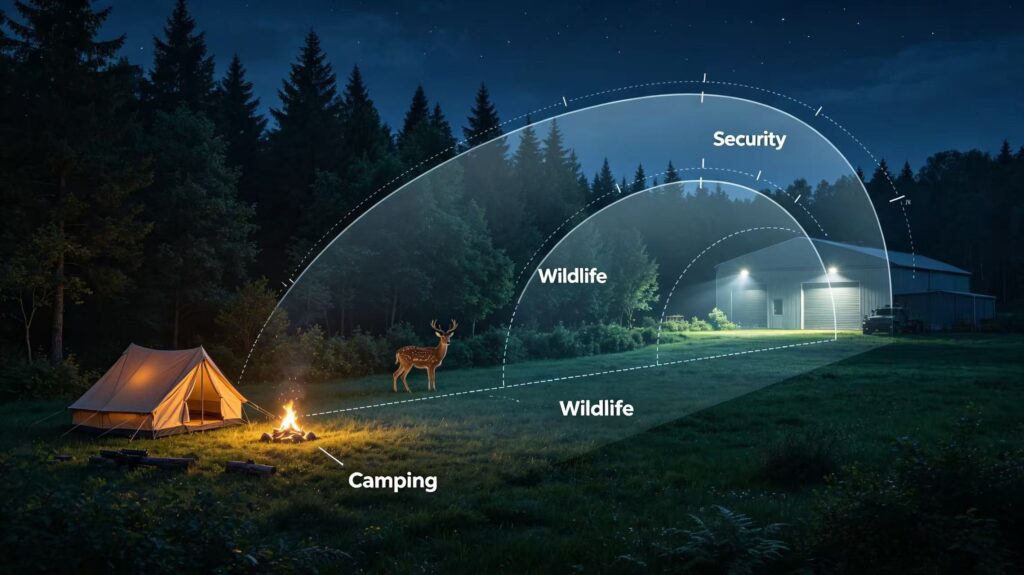
A digital night vision device may provide different observation distances depending on whether it is used for wildlife observation, hunting, outdoor exploration, or security applications.
In this guide, we will explain the key factors that affect night vision viewing distance and how to choose the right device for your needs.
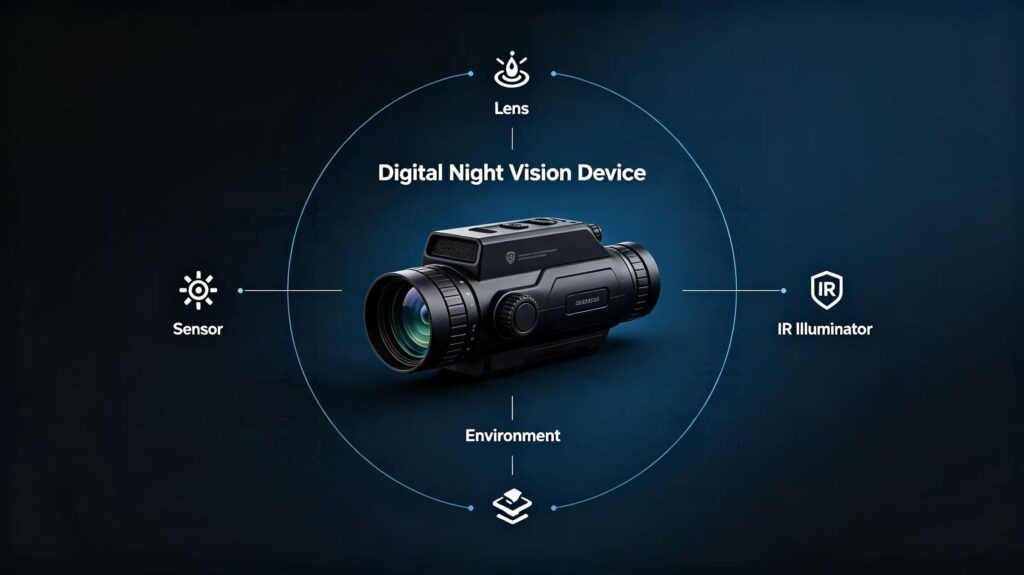
What Determines Digital Night Vision Viewing Distance?
Image Sensor Performance
The image sensor is one of the most important components affecting night vision performance.
A higher-quality sensor can capture more details in low-light environments, allowing users to identify objects more clearly at longer distances.
Modern digital night vision devices often use advanced CMOS sensors with different resolution options, such as 1080P, 2K, and 4K.
Higher resolution can improve image detail, especially when observing distant objects.
Lens Quality and Optical Design
The lens system also plays an important role in observation distance.
A quality lens can help capture more light and provide clearer images, especially when viewing objects farther away.
Factors such as lens diameter, optical quality, and magnification affect how much detail users can see at different distances.
Infrared Illumination Range
Infrared illumination is essential when there is little or no available light.
A stronger infrared illuminator can improve visibility in complete darkness and extend the effective viewing distance.
However, the actual range also depends on the sensor performance, lens quality, and surrounding environment.
Environmental Conditions
The surrounding environment can significantly affect night vision performance.
Factors such as:
- Fog
- Rain
- Dust
- Light pollution
- Background objects
may influence image clarity and viewing distance.
For example, a device may achieve a longer viewing range in a clean outdoor environment compared with a humid or foggy area.
Typical Viewing Distance of Digital Night Vision Devices
| Application | Typical Viewing Distance |
| Camping and outdoor exploration | Short to medium range |
| Wildlife observation | Medium to long range |
| Security monitoring | Medium to long range |
| Professional outdoor use | Depends on equipment configuration |
How to Improve Night Vision Observation Distance
Choose Higher Resolution
Higher resolution helps users recognize more details when observing distant targets.
For applications such as wildlife observation or outdoor exploration, higher-resolution digital night vision devices can provide a clearer viewing experience.
Use Proper Infrared Settings
Adjusting infrared illumination according to the environment can improve nighttime visibility.
Different situations may require different IR levels to achieve the best image quality.
Choose the Right Device for Your Application
The best night vision device depends on how you plan to use it.
A compact device may be suitable for camping and hiking, while a higher-performance model may be better for wildlife observation or professional applications.
Digital Night Vision vs Thermal Imaging: Which Provides Better Distance?
Digital night vision and thermal imaging use different technologies.
Digital night vision enhances available light to create detailed visual images, while thermal imaging detects heat differences between objects.
For users who need to see details such as animal shape, surroundings, and recorded images, digital night vision can be a practical choice.
For more information, read our comparison:
Recommended Digital Night Vision Devices for Long-Distance Observation
DS371 4K Digital Night Vision Binoculars
The DS371 4K digital night vision binoculars are designed for users who need high-resolution nighttime observation.
With advanced digital imaging, infrared illumination, and recording capabilities, it is suitable for wildlife observation, outdoor exploration, and long-distance viewing.
Z095 Digital Night Vision Binoculars
The Z095 provides comfortable binocular viewing with digital night vision technology.
It is suitable for outdoor users who need clear images and reliable nighttime observation performance.
Z9157 Pro Digital Night Vision Device
The Z9157 Pro offers portable digital night vision capabilities for outdoor activities and nighttime observation.
Frequently Asked Questions
Q1: How far can a digital night vision device see?
The viewing distance depends on the sensor, lens, infrared illumination, and environment. Different devices provide different observation ranges based on their design and configuration.
Q2: Does infrared illumination increase night vision distance?
Yes. Infrared illumination can improve visibility in dark environments and help users observe objects at greater distances.
Q3: Is higher resolution better for long-distance viewing?
Higher resolution can provide more image details, which helps users identify objects more clearly at longer distances.
Q4: What is the best night vision device for wildlife observation?
A suitable device should provide clear imaging, sufficient observation distance, reliable infrared performance, and comfortable operation for outdoor use.
Explore Digital Night Vision Solutions
Looking for a reliable digital night vision device for outdoor observation?
Explore our products designed for wildlife watching, hunting, and nighttime exploration.