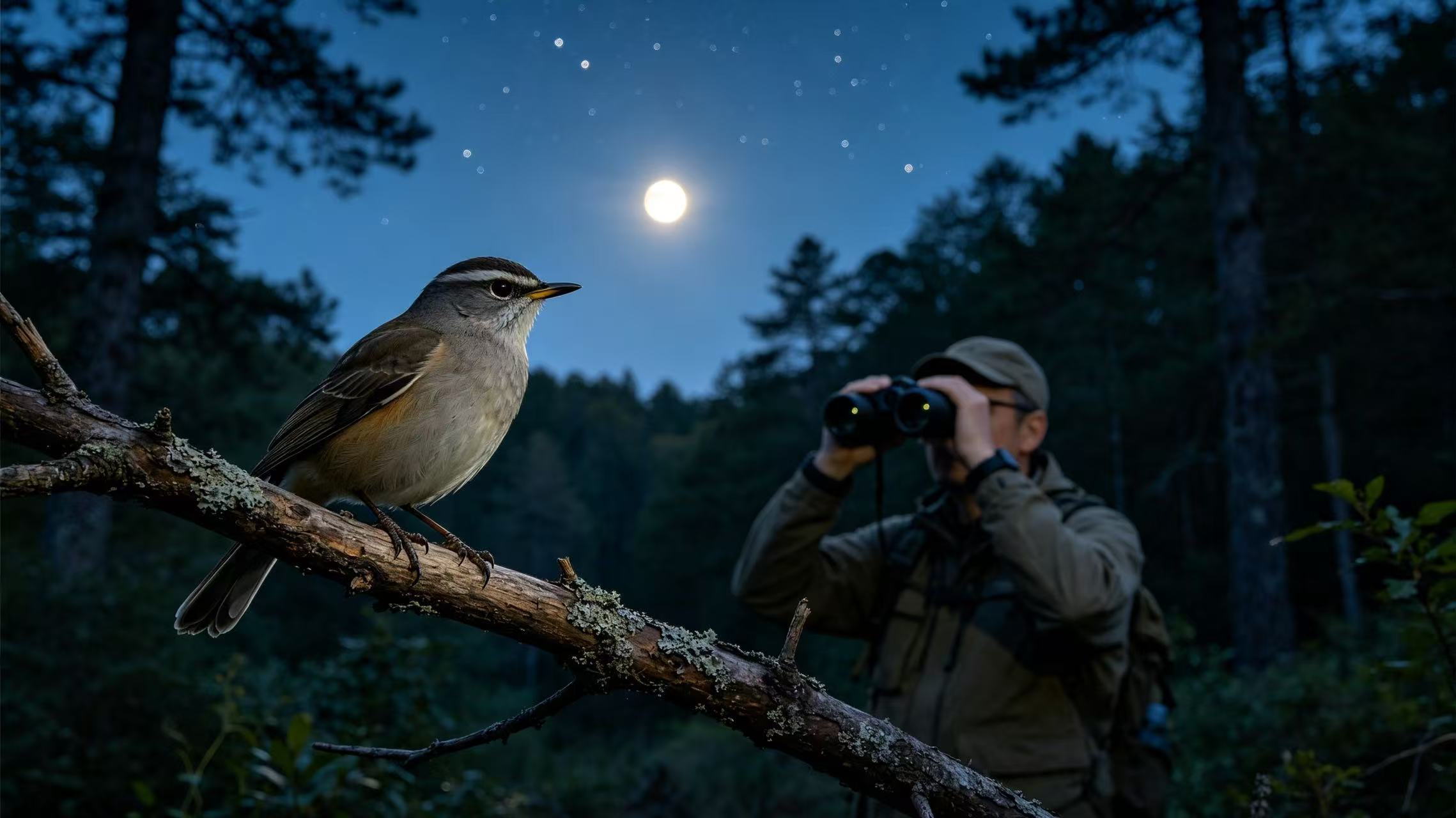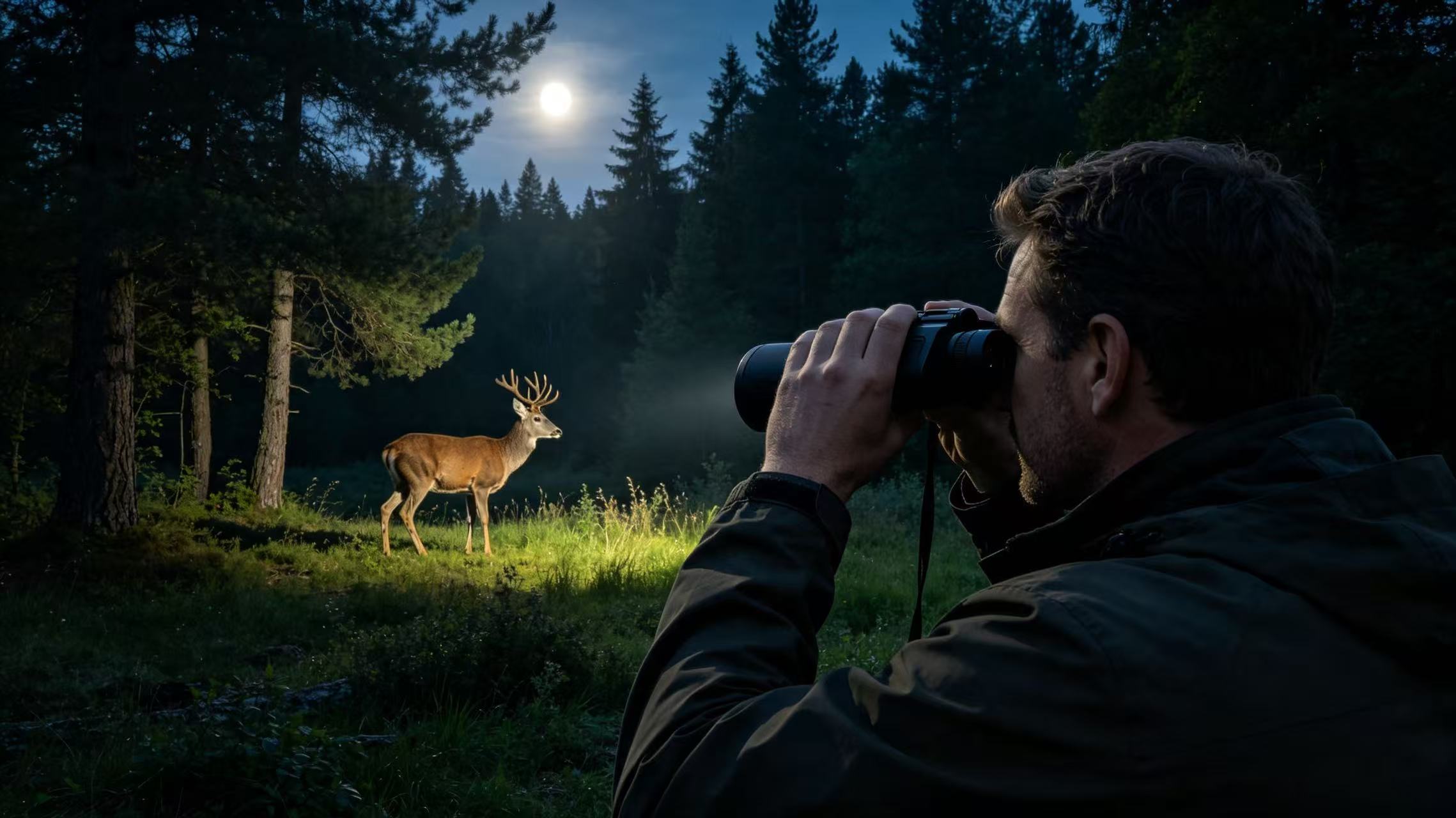
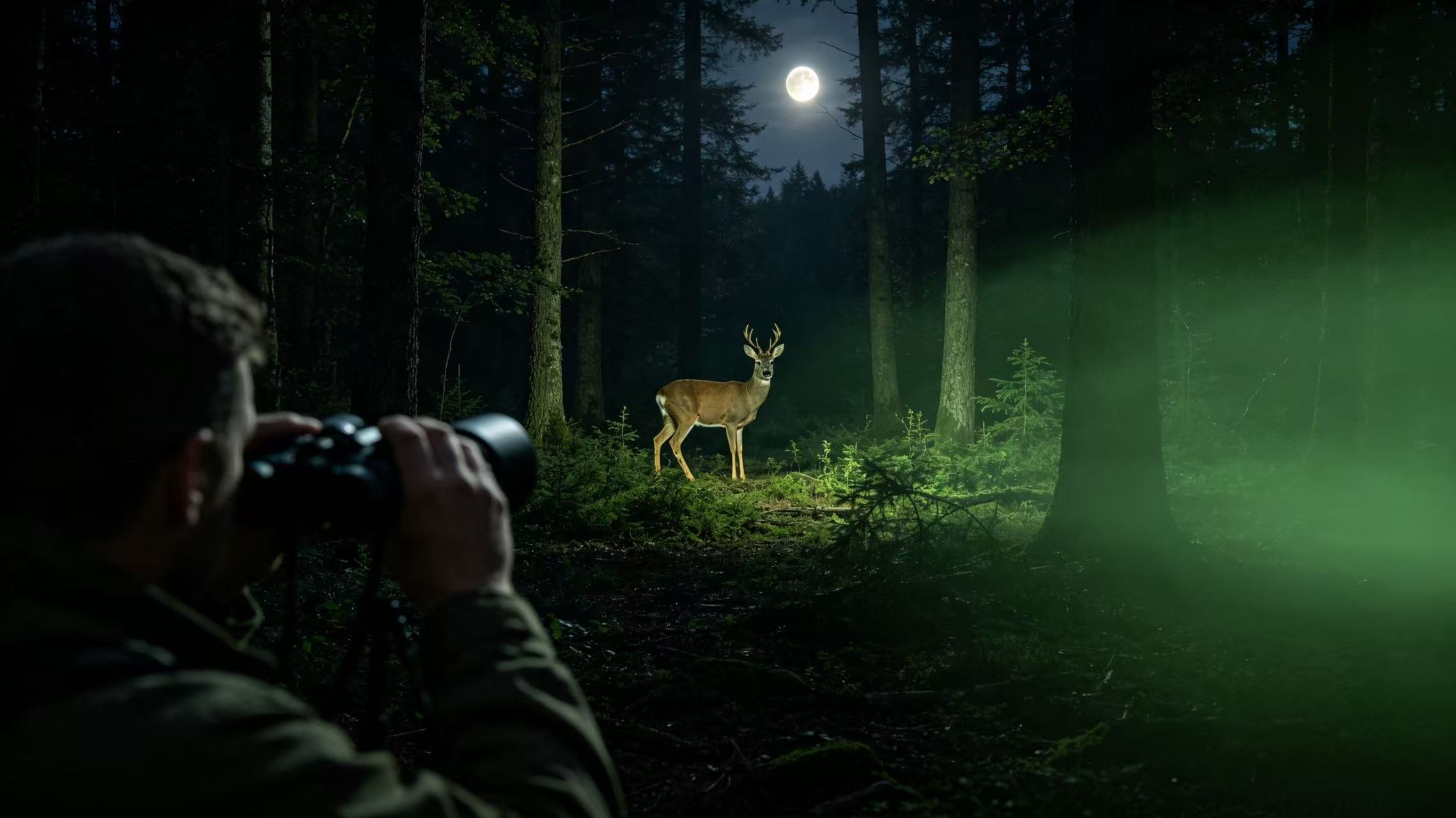
Observing wildlife at night offers a unique opportunity to discover animal behavior that is rarely visible during the day. However, low-light environments make it difficult to see details with the naked eye.
Digital night vision devices provide a practical solution by enhancing available light and using infrared illumination to create clearer images in darkness.
In this guide, we will explore how night vision technology helps wildlife observation, what features matter most, and how to choose the right device for outdoor activities.
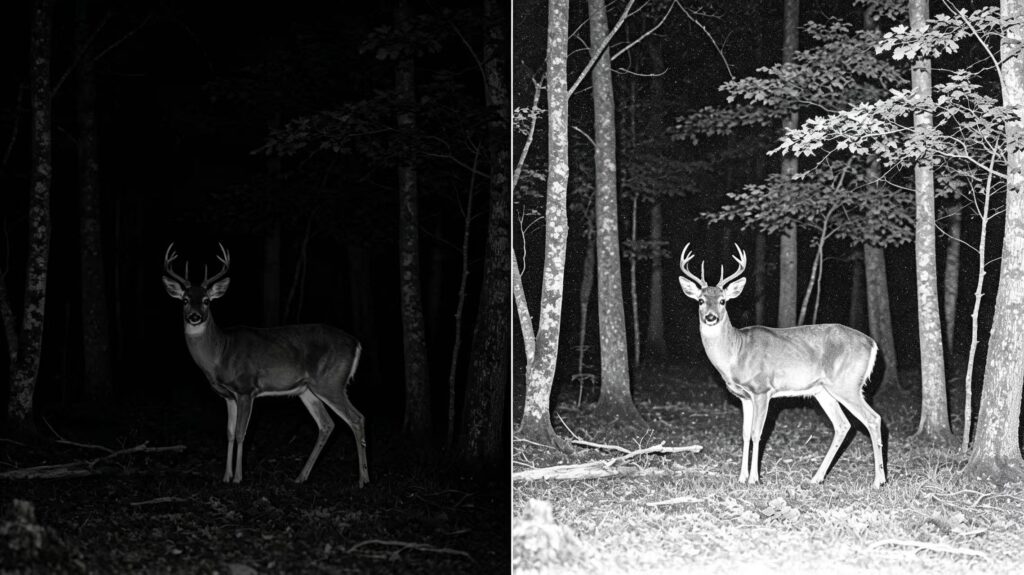
Why Use Night Vision for Wildlife Observation?
Many animals are most active during dawn, dusk, and nighttime hours. Traditional observation methods become challenging when natural light is limited.
Night vision devices allow outdoor enthusiasts, researchers, and wildlife observers to view animals without using bright lights that may disturb their natural behavior.
With digital night vision technology, users can observe, record, and analyze wildlife activities even in low-light environments.
Observe Wildlife in Low-Light Conditions
This allows users to see animals, landscapes, and movement details even when visibility is limited.
Record Wildlife Activities
Modern digital night vision devices are not only designed for viewing. Many models support photo and video recording, allowing users to capture wildlife activities for later review.
This feature is especially useful for wildlife research, nature observation, and outdoor documentation.
Key Features of a Wildlife Night Vision Device
Image Quality
Image quality is one of the most important factors when choosing a night vision device.
Higher-resolution sensors provide clearer details and better recognition of animals in dark environments.
Modern digital night vision devices commonly use HD, 2K, or 4K sensors to improve image clarity.
Infrared Illumination
Infrared illumination helps night vision devices operate in extremely dark environments with limited available light.
A powerful infrared illuminator can improve visibility and extend observation distance, making it easier to identify animals at night.
Detection Distance
Detection distance determines how far users can clearly observe wildlife.
The actual viewing range depends on several factors, including sensor performance, lens design, infrared power, and environmental conditions.
Battery Life
Wildlife observation often requires long periods outdoors.
A reliable night vision device should provide sufficient battery life for extended observation sessions, especially during camping, hiking, and field research.
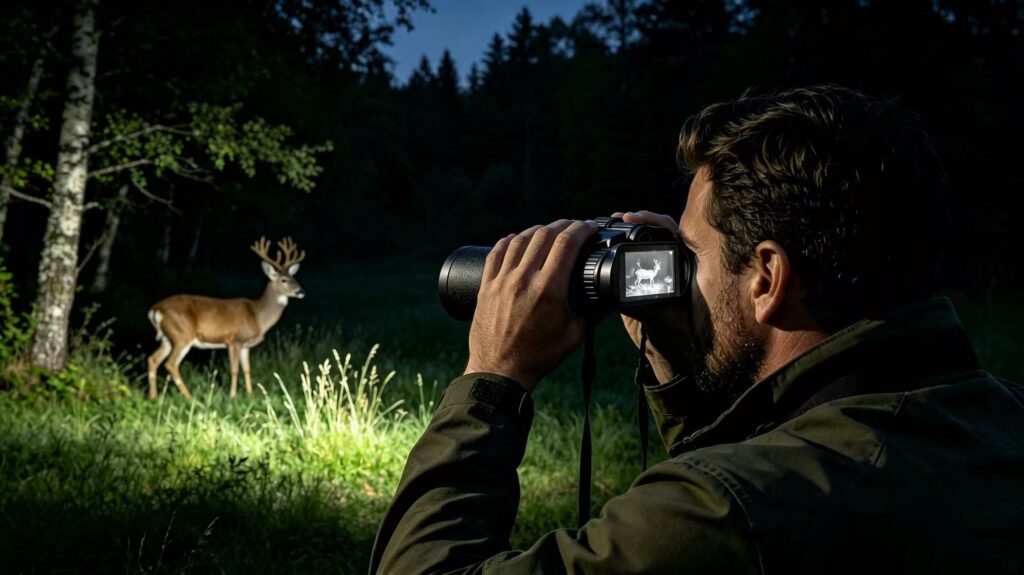
Digital Night Vision vs Thermal Imaging for Wildlife Observation
Both digital night vision and thermal imaging can be used for wildlife observation, but they work in different ways.
Digital night vision enhances available light to create detailed visual images, while thermal imaging detects heat differences between objects.
For users who want to see natural colors, details, and record videos, digital night vision is often a practical and affordable choice.
Recommended Night Vision Devices for Wildlife Observation
Z095 Digital Night Vision Binoculars
The Z095 digital night vision binoculars provide a compact solution for wildlife observation and outdoor activities.
Its binocular design offers comfortable viewing, while digital imaging technology helps users capture details in low-light environments.
M7001 Digital Night Vision Binoculars
The M7001 digital night vision binoculars are designed for outdoor observation, wildlife watching, and long-distance viewing.
With high-resolution imaging, infrared illumination, and recording functions, it provides clear images for nighttime exploration.
Tips for Better Wildlife Observation at Night
To get better results during nighttime wildlife observation:
- Choose a location with minimal light pollution.
- Avoid using strong visible lights that may disturb animals.
- Use infrared illumination when necessary.
- Keep the device stable for clearer images.
- Check battery levels before outdoor activities.
FAQ
Can night vision devices see wildlife at night?
Yes. Digital night vision devices can enhance available light and use infrared illumination to help users observe animals in low-light environments.
What is the best night vision device for wildlife observation?
The best device depends on your needs, including image resolution, detection distance, infrared performance, and recording features.
Is digital night vision better than thermal imaging for wildlife?
Digital night vision provides detailed visual images and is suitable for users who want to observe and record wildlife. Thermal imaging is better for detecting heat differences in complete darkness.
How far can a night vision device see animals?
The observation distance depends on the sensor, lens, infrared power, and environmental conditions. Higher-performance devices can provide longer viewing ranges.
Looking for a reliable digital night vision device for wildlife observation?
Explore our digital night vision products designed for outdoor exploration, hunting, and nature observation.